Collabs
The artists, media projects and chefs behind Kreëmart.
Marina Abramović
"Context makes a difference and my context is Art" Marina Abramović is a Yugoslav performance artist based in New York. Her work explores the relationship between performer and audience, the limits of the body, and the possibilities of the mind. Active for over three decades, Abramović has been described as the “grandmother of performance art.” She pioneered a new notion of identity by bringing in the participation of observers, focusing on “confronting pain, blood, and physical limits of the body.” From March 14 to May 31, 2010, the Museum of Modern Art held a major retrospective and performance recreation of Abramović’s work, the biggest exhibition of performance art in MoMA’s history. During the run of the exhibition, Abramović performed The Artist Is Present, a 736-hour and 30-minute static, silent piece, in which she sat immobile in the museum’s atrium while spectators were invited to take turns sitting opposite her. Marina has collaborated with Kreëmart on multiple occasions. “If you’re a baker, making bread, you’re a baker. If you make the best bread in the world, you’re not an artist, but if you bake the bread in the gallery, you’re an artist. So the context makes the difference. And my context is art.”

Alexandre Arrechea
In 2003, Alexandre Arrechea left the artist collective Los Carpinteros to pursue creating his multimedia art under his own name. His earlier works explore common themes of surveillance in contemporary society, the loss of privacy, and sources of power, though more recent works deal with contemporary social and economic issues like the stock market and migrants in Latin America. His experiential installations like The Garden of Mistrust(2003-5) and Perpetual Free Entrance (2006) in particular deal with issues of accessibility and the qualities of public and private space. His practice includes installation, painting, and the use of what he considers are objects with “elements of truth”; this last category has included found remnants of places, like debris, fragments of walls, and measuring tape.

Dimitri Broquard and Bastien Aubry
FLAG is a graphic design studio established in 2002 by Bastien Aubry (*1974) and Dimitri Broquard (*1969) in Zurich, Switzerland. Since then FLAG is working essentially for art and cultural projects such as catalogues, artists books, magazines and posters. FLAG also does drawings, illustrations for editorials and private projects. Both of them are teaching in different art schools in Switzerland.

Thom Browne
Thom Browne is an American fashion designer He is the founder and head of design for Thom Browne, a luxury fashion brand based in New York City. Browne debuted his womenswear collection in 2014. Browne moved to New York City in 1997, where he began working as a salesman at Armani. Club Monaco, then a Polo Ralph Lauren brand, later selected him to lead its creative development team, where he worked with American fashion designer Ralph Lauren. Browne led Club Monaco’s design department for several years before launching the widely successful Thom Browne label. Thom Browne collaborated with Kreëmart to celebrate the launch of their “Made to Measure” service at Bergdorf Goodman in October of 2005.

Olaf Breuning
Olaf Breuning creates videos, sculptures, drawings, and installations that investigate kitsch, appropriation, cliché, and popular culture, and hint at a collective visual iconography. Breuning’s unique mode of pastiche is eclectic by design, drawing icons from sources both high and low, Edvard Munch to Andy Warhol‘s Marilyns to the Easter Bunny. In “The Art Freaks,” a series of 2011 color photographs, Breuning painted nude models’ bodies to evoke the signature styles of influential 20th-century artists like Pablo Picasso, Francis Bacon, Jackson Pollock, and On Kawara, questioning our relationship to supposed “masterpieces,” as well as our mediated experience of them through reproductions.

Los Carpinteros
Los Carpinteros have garnered international attention and acclaim for their watercolors, sculptures and installations which succeed in both reflecting the political reality and closeted cultural context in which the work is conceived and made, while additionally addressing universal themes of the nature of art itself. They take inspiration from the physical world, particularly architecture and urban structures, furniture and design objects, tools and construction materials in order to craft works that express a visual syntax that dwells on the contradictions between object and functionality, art and the everyday, practicality and uselessness.
Raphaël Castoriano
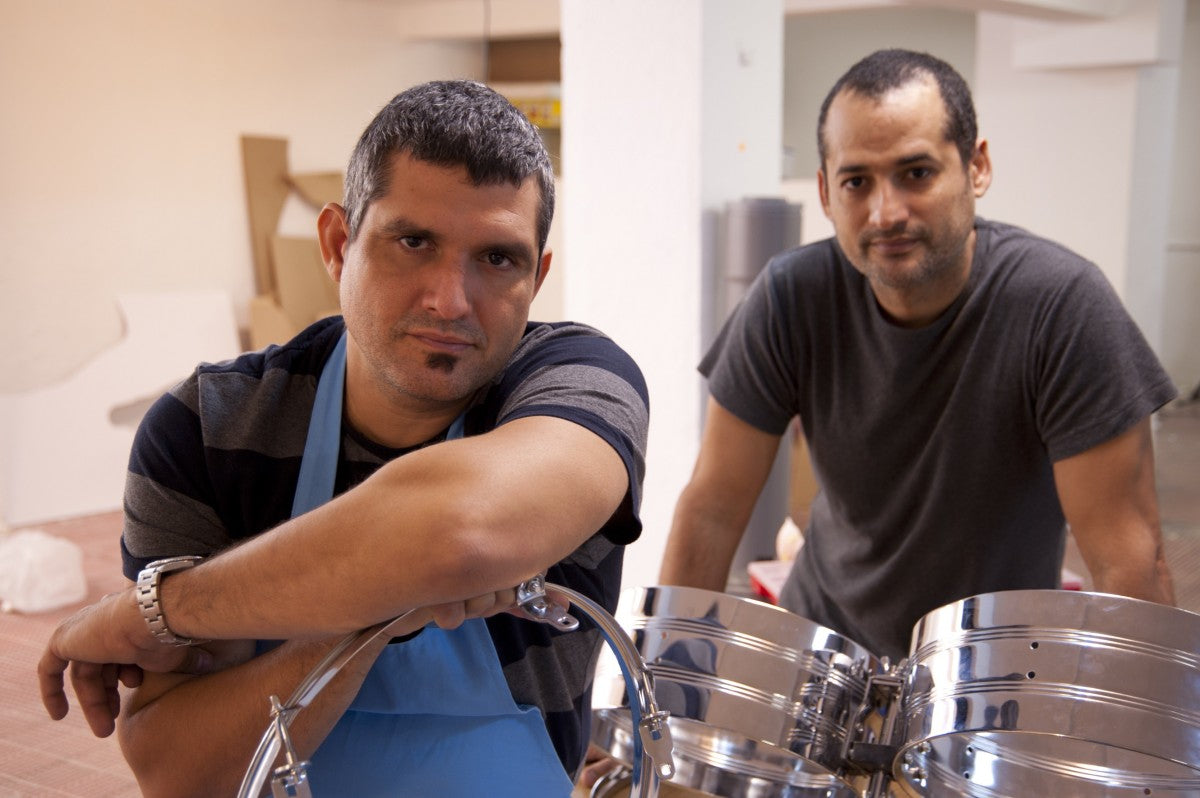
Raphael Castoriano is an artist, art advisor and founder & creative director of Kreëmart. Very well known in art circles around the world, Castoriano has a long history of cultivating relationships with artists, gallerists, museums and collectors internationally. He has a keen ability to anticipate the trends of the art world, continuously producing groundbreaking works year after year. In 2009, Castoriano founded Kreëmart, a collaborative artistic entity that takes contemporary artists out of their typical creative process by introducing them to the medium of taste through pastry. With Kreëmart, Castoriano has collaborated with some of the most influential artists in the world- including Marina Abramovic, Maurizio Cattelan, Rirkrit Tiravanija, Vik Muniz, Kenny Scharf , Anselm Reyle, Leandro Erlich and Richard Tuttle, amongst many others both established and emerging. Kreëmart seeks out cutting-edge pastry medium chefs and engineers best suited to execute our artistic vision. To this day, Kreëmart has collaborated with star of Netflix’s “Is it Cake” show, Dessiree Salaverria, Daniel Boloud, Guido Mogni, Domique Anselm, inventor of the Cronut, Pierre Herme, as well as the great minds behind Saint Ambroeous and Ladurée. Kreëmart’s work has been presented in the most prestigious museums and art fairs worldwide- Moma Museum (NYC) , Guggenheim Museum (NYC), Whitney Musuem (NYC), MOCA Museum (Los Angeles), Palais de Tokyo Musuem (Paris) , Garage Museum (Moscow) , Asia Society (Hong Kong) , Art Basel (Miami) , Art Basel (Switzerland) , Armory Fair (NYC) , Independent Art Fair (NYC), ART Rio (Rio de Janeiro), CCBB Museum (Brasilia) , Biennal SP (Sao Paulo), Venice Binnale (Venice), CIFO (Miami). Harrods (London), and Le Rosey Boarding School (Rolle, Switzerland)

Maurizio Cattelan
Nothing is sacred to Maurizio Cattelan, the art world’s resident jokester who has been variously amusing and horrifying viewers since the early 1990s. For his 2012 retrospective at the Guggenheim, “All,” Cattelan hung the full range of his iconoclastic sculptures from the center of the museum’s sanctified rotunda—including waxworks of a miniature Hitler, Pope John Paul II struck down by lightning, JFK in a coffin, and the artist himself hung by his neck, accompanied by several of his trademark taxidermies, including an ostrich burying its head, a squirrel who’s just committed suicide, and Novecento, the dangling horse that is perhaps his most career-defining work. A prolific curator and writer outside of his artistic practice, Cattelan is seen by many as one of Duchamp's greatest contemporary heirs, enacting morbidly humorous transformations on objects and history alike.

Kelly Dabbah
A site-specific installation at the Bugnone private home Kreëmart presents a special site-specific installation by artist Kelly Dabbah at the private home of art collectors Julie and Edoardo Bugnone for Art Genève 2026. This is the first iteration of the bedroom-take over project which invites emerging artists from all over the world to create a site-specific installation in the Bugnone private collection. In “Unconscious Desires” Dabbah employs her signature collage technique to takeover a bedroom of the Bugnone’s home and transform it into a saturated maximalist self-portrait of her subconscious: vibrating with color, pattern and style—encouraging everything but sleep. The eclectic fabric prints that adorn the furniture and walls, vie for the viewer’s attention while echoing the oversaturated media landscape we navigate today. The dynamic content within the compositions, ranging from botox needles to 17th century corsets, highlights and critiques societal pressures faced by women, through a hyper-stylized and diverse framework that appeals to all identities. To enquire, please email: info@kreemart.com

Romina De Novellis
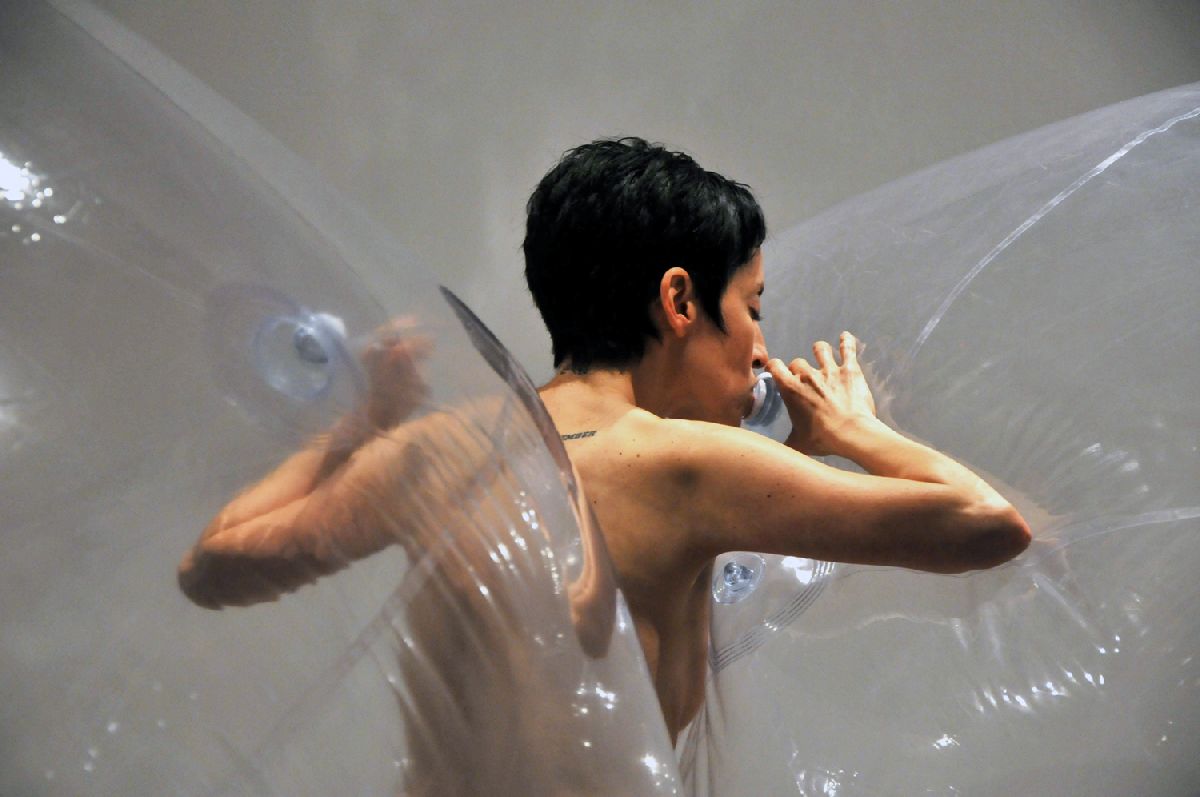
Romina De Novellis is an Italian performer, born in Naples in 1982. She currently resides in Paris, France. Her artistic work addresses the concept of the body in a public space, and deals with the vulnerability that comes along with subjecting oneself to the gaze of the public. Through gesture and exposure, De Novellis explores how states of trance, alienation, and madness can manifest on the body, especially in the precarious human conditions that exist on the margins of society. argins of society.

Stephan Doitschinoff
Stephan Doitschinoff is a Brazilian visual artist based in Sao Paulo. Over the years the artist has developed a series of works influenced by the regular research on religious practices and rituals, psychoactive plants, as well as reflections on structures of power, imperialism, consumerism, and post-truth. His most recent work is the sect-church “Cvlto do Fvtvrv” a complex artwork that is formed by a series of paintings, installations, performances, neons, website, social media, digital art, animations, films, sculptures, jewelry, temples, and videogame.

Lindsay Dye
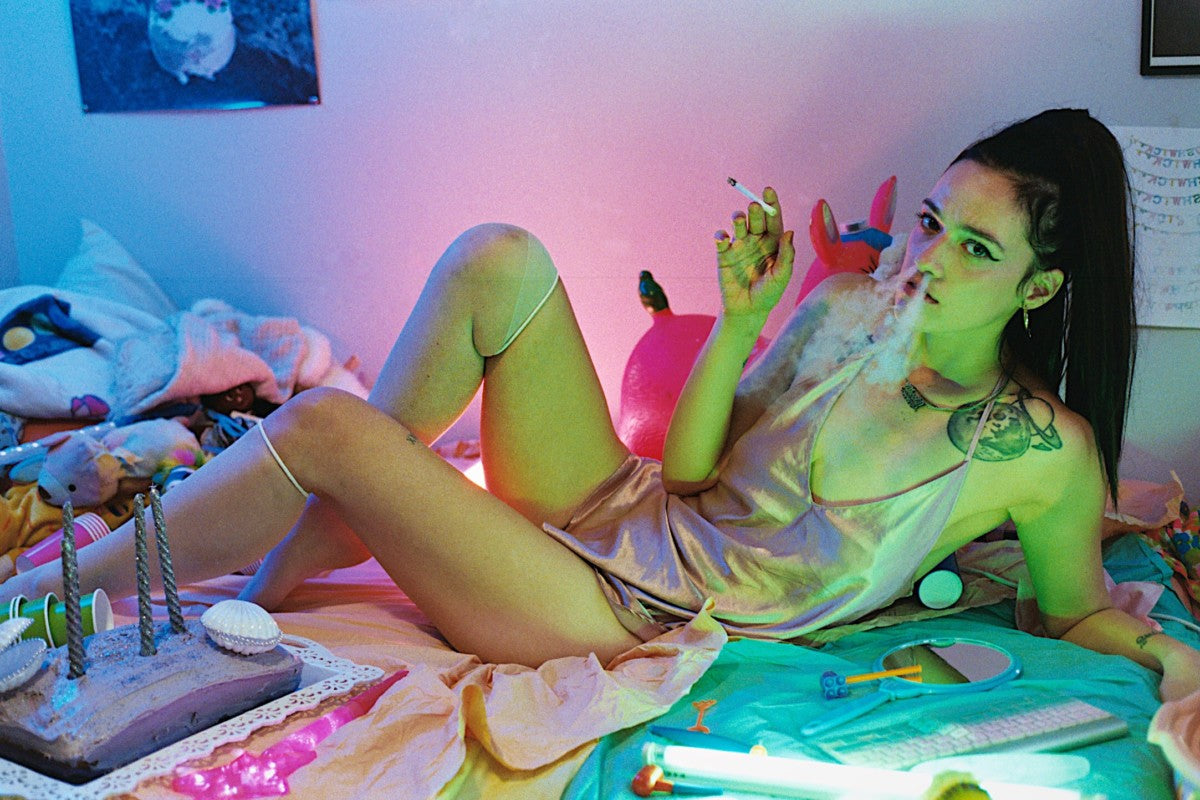
Lindsay Dye is an artist who has become well known for her cake-sittings. She’s been performing and creating videos since 2015 at venues, parties, events, etc. She is a cam girl who’s broken the boundaries of our guarded world by exploiting this fetish openly. Dye believes in order to live more comfortably in our sexuality we need to divulge in these fetishes and live more sex positive.
Leandro Erlich
Leandro Erlich is an internationally exhibited Argentine conceptual artist. In 2001 he represented his nation at the Venice Biennial and was included in the main section of the biennial once again in 2005.

Ghada Amer and Reza Farkhondeh
Since 2001, Ghada Amer and Reza Farkhondeh have been expanding their own practices by collaborating with each other, producing mixed-media works on paper full of eroticism and wit. Farkhondeh brings his investigations into the forms and beauty of nature to Amer’s bold, sexually explicit explorations of female sexuality. Though they have worked together, they mostly remain ensconced in their separate studios, passing works back-and-forth, adding their own marks to them. "Our collaboration is a mutant riddle…a type of creation that resists control" This method results in compositions built from a series of scrim-like layers that simultaneously reveal and conceal images of masturbating and lovemaking women; patterns of flowers, birds, and insects; cartoon characters; Hindu deities; and passages of Arabic script. Such combinations read as a culture clash—between East and West, purity and prurience, decorum and abandon.

Teresita Fernández
Teresita Fernández is a conceptual artist best known for her prominent public sculptures and unconventional use of materials. Her work is characterized by an interest in perception and the psychology of looking, and her experiential, large-scale works are often inspired by landscape and natural phenomena, as well as diverse historical and cultural references. For example, from the Plexiglas circular labyrinth Bamboo Cinema (2001) to the graphite seascape Nocturnal (Neon Miniature) (2011) to the shimmering blue walls of Stacked Waters (2009) in the atrium of The Blanton Museum, Texas, Fernández references traditional artistic techniques from Baroque-era ceiling painting and conventions of landscape painting to the works of Land artist Robert Smithson and Minimalist Donald Judd.

Sandra Gamarra
Sandra Gamarra’s painting, sculpture, and video works question the worth of replicas and the glorification of authenticity. She is most well known for initiating the Lima Museum of Contemporary Art in 2002, a fictional museum in her hometown that consisted of the artist’s hand-painted replicas of artworks by other contemporary artists. Contemplation of art is considered a holy rite for Gamarra, and she challenges the viewer’s trust in the art-viewing environment. She prompts the viewer to direct their attention to the ways in which they might define “art” and “appropriation.”

Carlos Garaicoa
Carlos Garaicoa translates his fascination with the ruins of Havana into drawings, photographs, and mixed-media and video installations. “The city is a very rich subject to make work about love, hate, history, beauty, what people expect from life and how politics get involved,” he has said. His installations evoke a Havana in a state of tension between utopian ideals and dilapidated reality—Japanese Garden (2001), for example, was a room-size environment reminiscent of a peaceful, enclosed Zen garden, but its walls were plastered with photos of urban decay and neglect. Garaicoa has practiced the manipulation of photographs to explore similar themes, superimposing drawings or outlines of imagined structures in thread.

Carlos Gómez Centurion
Carlos Gómez Centurión was born in San Juan, and lived in Buenos Aires, Argentina from 1970 to 1982. He studied at the Citè Internationale des Arts in Paris in 1988, during which time he also held his first solo exhibition. Gómez Centurión’s oeuvre consists of large-scale paintings directly inspired by the nature around him, particularly the Andes Mountains, having taken several immersive trips to the region. Painted en plein air, his works are composed of loose brushstrokes and patches of color that describe the way he feels in nature and the greater world.

María José Arjona
María José Arjona, a Colombian performance artist well-known throughout Latin America, was born in Bogotá in 1973. She now lives and works in New York and Miami. Her practice involves long durational performance characterized by near-monastic rigor, and designed as experiential studies in what she considers the biggest and most critical element in performance: time. Her tests of her own physical and psychological endurance confront the viewer, who is invited to acknowledge his or her choice between an active and passive response. Arjona was one of the performers chosen by Marina Abramovic for The Artist Is Present, her retrospective exhibition at MoMA in New York in 2010. As part of the preliminary work towards this exhibition, Abramovic and Arjona jointly presented the workshop Cleaning the House. In 2009, she was an artist-in-residence at the Robert Wilson’s Watermill Arts Center, and has staged performances at major museums and venues in South America, the US and Europe before and since.
Terence Koh
Terence Koh rapidly gained notoriety in the art world following his installation at Art Basel in 2007, which featured clumps of the artist’s own excrement covered in gold leaf. Such subversive gestures pay homage to Marcel Duchamp and the Dadamovement, while other works such as Big White Cock (2006) examine symbols of gay subculture and the fetishization of objects. Another strain of Koh’s work explores spirituality and asceticism, as in his 2011 performance entitled nothingtoodoo, in which Koh took a vow of silence, dropped to his knees, and repeatedly circled a massive pile of salt for hours at a time. Koh’s diverse oeuvre encompasses sculptures, installations, and performance works, raising questions that range from how to define the role of the artist to what constitutes “otherness” in contemporary society.

Glenda Leon
Trained in classical ballet, Cuban conceptual artist Glenda Leon creates video, installation, public interventions, and photography that examine the relationship between the man-made and the natural, often highlighting the folly of human timekeeping. As Leon has said, “it takes a whole lifetime to create an artwork.” Her work Wasted Time consists of a mountain of sand that has engulfed an hourglass, and in the summer of 2004, the artist glued fake green leaves to tree branches in a public park for her work Esperanza (Out of Season). When the seasons changed, the surrounding leaves turned brown and fell to the ground, only then revealing their artificial counterparts.

Kalup Linzy
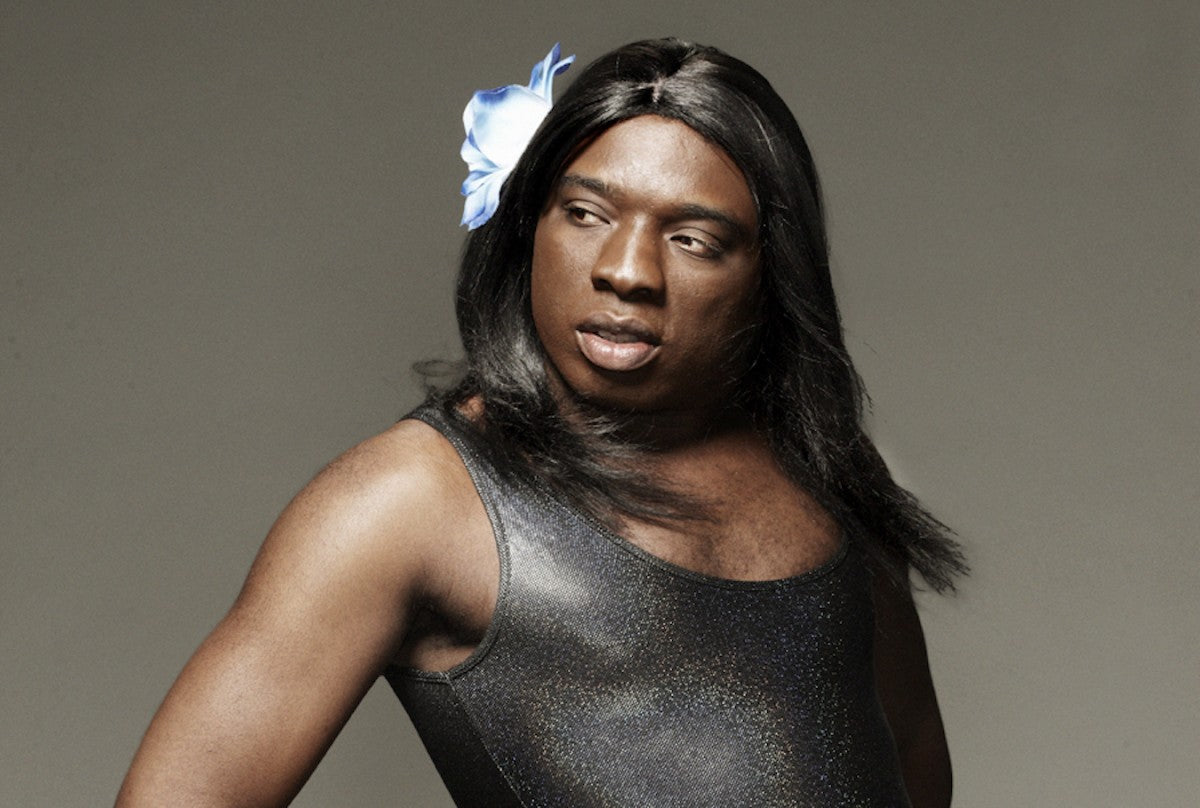
Kalup Linzy is a multi-faceted performance artist based in Brooklyn with roots in rural central Florida and Southern black culture. His videos and most recent Melody Set Me Free episodes have touched on stereotypes of race, gender, sexuality, satirized soap opera and telenovela kitsch. The artist serves as writer, director, cinematographer, editor, and actor—and, in a distinctive strategy, also voices and overdubs the dialogue of multiple characters. At once comic, raunchy and poignant, Linzy’s unique narrative videos fuse dramatic intensity with melodramatic irony. Linzy has been the recipient of numerous awards including grants from the Louis Comfort Tiffany Foundation, the John Simon Guggenheim Memorial Foundation, Creative Capital Foundation, Jerome Foundation, and Art Matters. His work is in the permanent collections at The Studio Museum in Harlem, Whitney Museum of American Art, and the Museum of Modern Art.
Daniel Lismore
Daniel Lismore is a London based artist, creative consultant, celebrity stylist, writer and campaigner. He started his career as a photographer before moving in front of the lens and becoming a model. He has been shot by and acted as creative consultant to some of the world’s most famous photographers including Mert & Marcus, Steven Klein, David LaChapelle and Ellen von Unwerth. He is known for living his life as art, for elaborate and extravagant ensembles that brilliantly combine haute couture with vintage fabrics, found objects, chainmail. ethnic jewellery, millinery and more in an expression of eccentric, creative energy. Inspired by art in all its forms, history and his travels, Lismore constantly combines and amalgamates multiple inspirations from around the world into vibrant expressions of cultural appreciation. Lismore has been named by Vogue as England’s most eccentric dresser, and selected as one of Out 100 and in the top 100 of the Guardian’s Pride Power List. A prominent fixture on the London fashion and art circuits, he is both a tastemaker and friend to artists ranging from Stephen Fry and Debbie Harry, to Boy George and Edward Enninful who all contributed to his first book, Be Yourself, Everyone Else Is Already Taken published by Rizzoli. In this book he shared 32 3D sculptures that comprised his first US museum exhibition, co-curated by Savannah College of Art and Design and which was later displayed at Miami Art Basel. In May 2017 he had an exhibition at the Venice Biennale. In June 2018 Lismore curated a month long show of his work at Harpa Hall in Iceland as the highlight of the Reykjavik Arts Festival attended by the likes of Bjork & David Beckham. The exhibition will continue to travel the world and will opening at Pan Museum in Naples in July 2019 and Art Gallery Space in Poznań November 5th 2019.

Rachel Marks
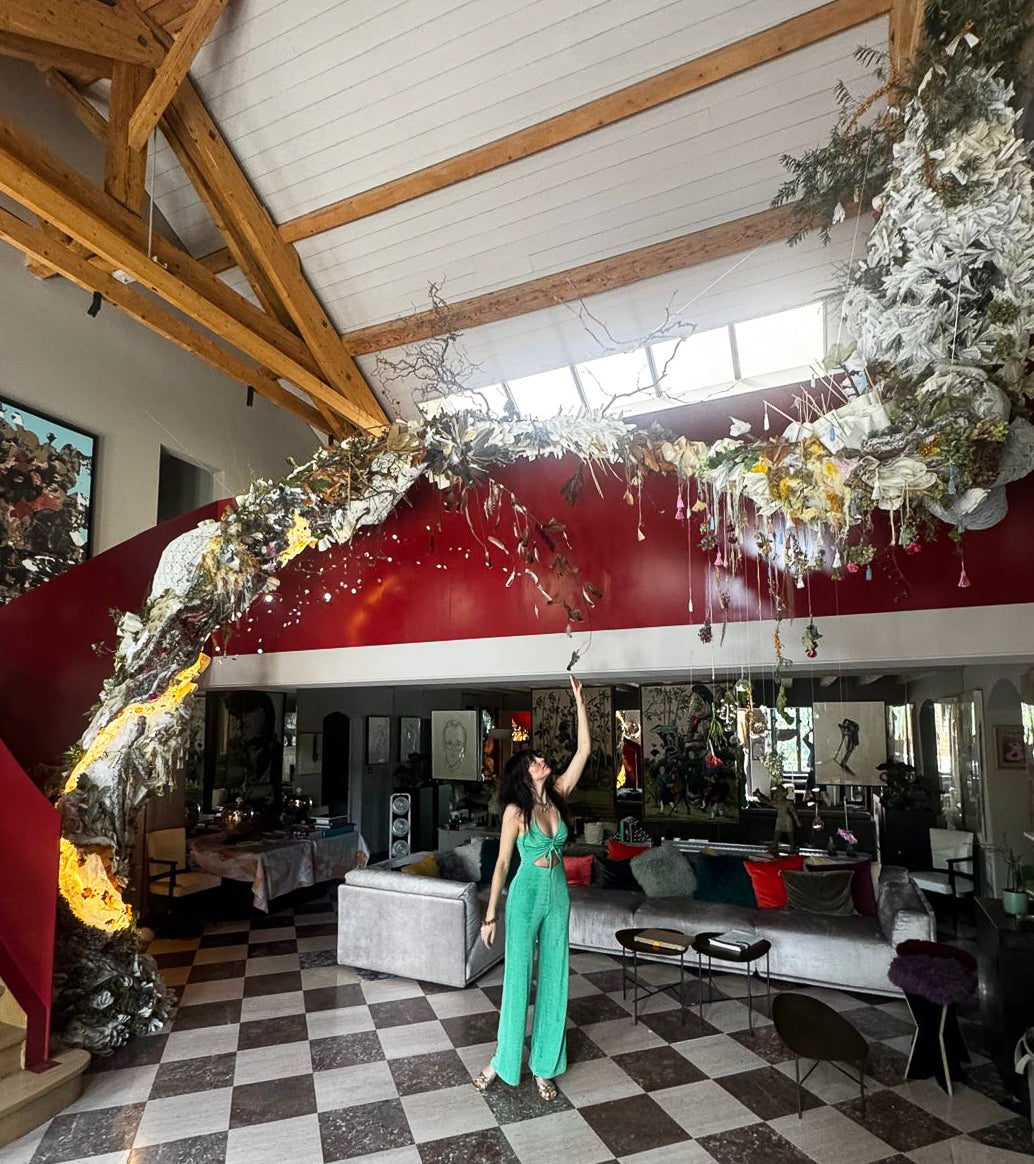
Rachel Marks’ work centers on the creation of immersive environments through monumental, site-specific installations. Her practice investigates the relationship between nature and humanity, with a particular interest in the ways trees coexist, communicate, and thrive within forest communities. Working across large-scale installation and performance, as well as sculpture, painting, and drawing, she invites audiences to reconsider their relationship with the natural world. Her primary materials are abandoned books and paper, which she transforms in ways that evoke their return to their original source: trees. Through this process of metamorphosis, Marks explores cycles of transformation, connection, and renewal. Her work seeks to draw attention to the complexity and beauty of nature while encouraging a deeper awareness of the importance of its preservation. Marks received a Bachelor of Fine Arts in Drawing and Painting from Oklahoma State University in 2010 and a Master of Fine Arts from l’École Supérieure d’Art et Design de Grenoble, France, in 2013. Alongside her artistic practice, she is a tenured professor at Parsons Paris. Her installations and performances have been presented throughout France and internationally, including at the Philharmonie de Paris; Grand Palais, Paris; Fondation Martell, Cognac; Today Art Museum, Beijing; Children’s Museum of the Arts, New York; Kobe City, Japan; Musée de la Chasse et de la Nature, Paris; Casa Amarela, Rio de Janeiro; Strano Film Festival, Abruzzo, Italy; SPRING/BREAK Art Show, New York; National Sawdust, New York; Gallery U10, Belgrade; Instituto Municipal de Arte y Cultura, Tijuana; and Gallery Gong, Seoul.
Ryan McNamara
In a 2010 in-boutique performance commissioned by Louis Vuitton, in which dancers spontaneously licked a signature handbag until it was covered in saliva, wreaking havoc on what was supposed to be a pristine performance. Heavily influenced by the MTV music videos he grew up watching, McNamara is known for situation-specific works involving the participation of viewers, professional dancers, and other artists. In early 2012, “Still”, his first solo gallery show, mandated that visitors pose for photos donning unusual costumes and enacting stills from performances, an inversion of the typical artist/performer relationship. In the second phase of the exhibition, he displayed the photographs decoupaged on the objects, backdrops, and costumes used in the performances.

Marilyn Minter
Marilyn Minter (b. 1948, USA) lives and works in New York. She has been the subject of numerous solo exhibitions including the San Francisco Museum of Modern Art in 2005, the Center for Contemporary Art, Cincinnati, OH in 2009, La Conservera, Centro de Arte Contemporáneo, Ceutí/Murcia, Spain in 2009, the Museum of Contemporary Art, Cleveland, OH in 2010, and the Deichtorhallen in Hamburg, Germany in 2011. Her video Green Pink Caviar was exhibited in the lobby of the MoMA in 2010 for over a year, and was also shown on digital billboards on Sunset Boulevard in L.A. and the Creative Time MTV billboard in Times Square, New York. Minter’s work has been included in numerous group exhibitions in museums all over the world. In 2006, Marilyn Minter was included in the Whitney Biennial, and in collaboration with Creative Time she installed billboards all over Chelsea in New York City. In 2013, Minter was featured in “Riotous Baroque,” an exhibition that originated at the Kunsthaus Zürich and traveled to the Guggenheim Bilbao. In 2015, Minter’s retrospective Pretty/Dirty opened at the Contemporary Arts Museum, Houston, TX. Pretty/Dirty and then traveled to Museum of Contemporary Art, Denver, and on to the Orange Country Museum of Art. Pretty/Dirty opened at the Brooklyn Museum in November, 2016. Minter is represented by Salon 94, New York, Regen Projects, Los Angeles and Baldwin Gallery in Aspen.

Antoni Miralda
Miralda was born in Terrassa, Barcelona, in 1942 where he grew up in the atmosphere of a textile manufacturing town. After military service, he moved to Paris in 1962, starting to create sculptural objects and drawings while making a living through his work in photography for fashion magazines. Beginning various series of sculptures working with toy soldiers, he exhibited in Paris, London and other European cities. In 1967 he began to create ‘food sculptures’ working with organic materials and with objects from popular culture. He also started to collaborate with other artists in creating participatory events with colored food and ceremonial rituals. The small-scale work evolved into large constructions in public sites while the private events grew into complex public ceremonial events involving ritual and color. In 1971 he moved to New York, and since then he has lived and worked in the United States and Europe creating public art and installations. In 1979 he was a fellow of the Center for advanced Visual Studies at M.I.T., and began to create a series of art videos and other documentary works. From 1986 to 1992 he developed the Honeymoon Project, a multi-site, international art project of the symbolic wedding of New York’s Statue of Liberty with the Columbus Monument in Barcelona. His projects have engaged international art audiences in Documenta VI, at the XVII São Paulo Bienal, at his retrospective exhibition organized by the Caixa de Barcelona and Valencia’s IVAM, and at the Venice Biennale in 1990. His street events in New York, Kansas City, Las Vegas and Aspen, and his exhibitions in Houston, Philadelphia and Miami, among others, have introduced Miralda’s work to the general public in North America.

Mariko Mori
Mariko Mori’s diverse work, which has included video and photography, works on paper, sound, sculpture, and large-scale installations, explores the intersection between art and science, antiquity and modernity, and East and West. In her early work Mori explored urban cyberculture and kitsch, and used herself as a model in quirky photographs of fantastical Manga-inspired environments. More recently she createdWAVE UFO (2003), her acclaimed capsule-shaped structure resembling a spaceship that exhibited at the 2005 Venice Biennale; visitors can enter attached to electrodes that gather brainwave data and turn it into real-time visualizations viewable on screens within the space. Mori has also examined Jomon and Celtic traditions and belief systems, fusing ancient symbols and rituals with advanced digital technologies in works such as Transcircle 1.1 (2004), a version of Stonehenge composed of glowing lights. Juxtaposing divergent cultures and disciplines such as Buddhism and science, or traditional tea ceremonies and Manga, Mori creates an aesthetic vocabulary that points simultaneously forward and backward.

David Mramor
David Mramor collapses painting and photography in his mixed-media canvases to explore and question the veracity of both mediums. In describing his approach, he writes that he “creates an interruption that looks to question the reality of the paint versus the reality of the photograph. The ‘real’ versus the ‘illusion.’” These interruptions appear as thick patches of modeling paste, gestural acrylic brushstrokes, dripping spray paint, and washes of varnish, among many other markings and materials, all of which Mramor applies over blurred photographic images printed directly onto canvas. The base images for his emotionally charged, obliquely personal works come from his own collection of snapshots of friends, family, and natural landscapes. Partially obscured and fuzzy, they appear as ghostly auras of their actual subjects, suggesting that perhaps paintings and photographs do capture the essence of that which they depict.
Vik Muniz
Photographer and mixed-media artist Vik Muniz is best known for repurposing everyday materials for intricate and heavily layered recreations of canonical artworks. Muniz works in a range of media, from trash to peanut butter and jelly, the latter used to recreate Andy Warhol’s famous Double Mona Lisa (1963) that was in turn an appropriation of Da Vinci’s original. Layered appropriation is a consistent theme in Muniz’s work: in 2008, he undertook a large-scale project in Brazil, photographing trash-pickers as figures from emblematic paintings, such as Jacques-Louis David’s Neoclassical Death of Marat, and then recreating the photographs in large-scale arrangements of trash. The project was documented in the 2010 film Waste Land in an attempt to raise awareness for urban poverty. Muniz explained the work as a “step away from the realm of fine art,” wanting instead to “change the lives of people with the same materials they deal with every day.”

Youssef Nabil
Youssef Nabil is an artist working primarily with photography and video. Originally born in Cairo, Egypt in 1972, he currently lives and works in New York City and Miami. Known for his distinctive technique of hand coloring silver gelatin prints that remove the blemishes of reality and recall the heyday of Egyptian cinema. While working with video and photography, he disrupts the preconceived assumptions about the type of aesthetics associated within those mediums and those identified with his culture. His artwork evokes a sense of longing and nostalgia, allowing his work to flicker between our time and another era. Three monographs have been published on Nabil’s work: Sleep in My Arms (Autograph ABP and Michael Stevenson, 2007), I Won’t let you die (Hatje Cantz, 2008) and Youssef Nabil (Flammarion, 2013).

Angel Otero
Angel Otero, who channels that passion into paintings and sculptures layered with directly applied oil paint and the sheets that form when it dries, called oil paint skins. He covers his large-scale canvases with these thick, folding sheets, creating densely textured compositions full of hills and crevices. For his sculptures, he mixes materials like metal and wood with household items and furniture, which he then encrusts with the skins. Otero’s works range from entirely abstract, in his words, “purely gestural,” to semi-representative, incorporating ghostly figures, floral patterns, or evocative phrases. Inspired by his music-filled childhood home and the fiercely independent New York School artists, Otero pursues a bold, iconoclastic vision in all of his work.
Tony Oursler
Tony Oursler is an American artist born in 1957. After Graduating from the California Institute of Arts, Oursler started to work primarily with video and installation. He truly revolutionized certain aspects of projection by surpassing the frame of the screen. Oursler uses different mediums such as video, film, photography, handmade objects, sculpture, computers, the web, and also elaborate soundtracks. The visual sensations of the viewer are heightened as the artist ingenuously occupies space with these projections. These confusing, enigmatic, and obsessive virtual characters deliver a message, and present a parable of miscommunication.

Paola Pivi
Best known for her series of whimsical, feather-covered bears, Paola Pivi seeks to reveal the power of imagination and freedom through her photographs and sculptures. Animals, often in bizarre or surreal settings, frequently figure into her work due to their associations with the human condition. She believes that every person holds a memory of a time when humans were closely connected with animals; as such, her viewers are represented within the animals. Pivi prefers not to read too much into her art. "It is the art that is the interesting thing, and to elaborate on it just doesn’t serve any purpose for me." Instead, Pivi simply creates extraordinary, improbable environments that resonate with the audience.

Anselm Reyle
The work of Anselm Reyle is intimately linked to Modernism, borrowing, critiquing, and reinventing its conventions all at once. Reyle’s abstract sculptures and paintings are made with fluorescent colors, found objects, and shiny common materials including foil, glitter, and mirrors. Inspired by early abstract painter Otto Freundlich and using techniques innovated by Jackson Pollock and Barnett Newman, Reyle self-consciously revives aspects such as Hard-Edged stripes and the gestural brushstrokes of Abstract Expressionism. In 2011, Reyle made his affinity for popular culture explicit, designing accessories for fashion house Dior.

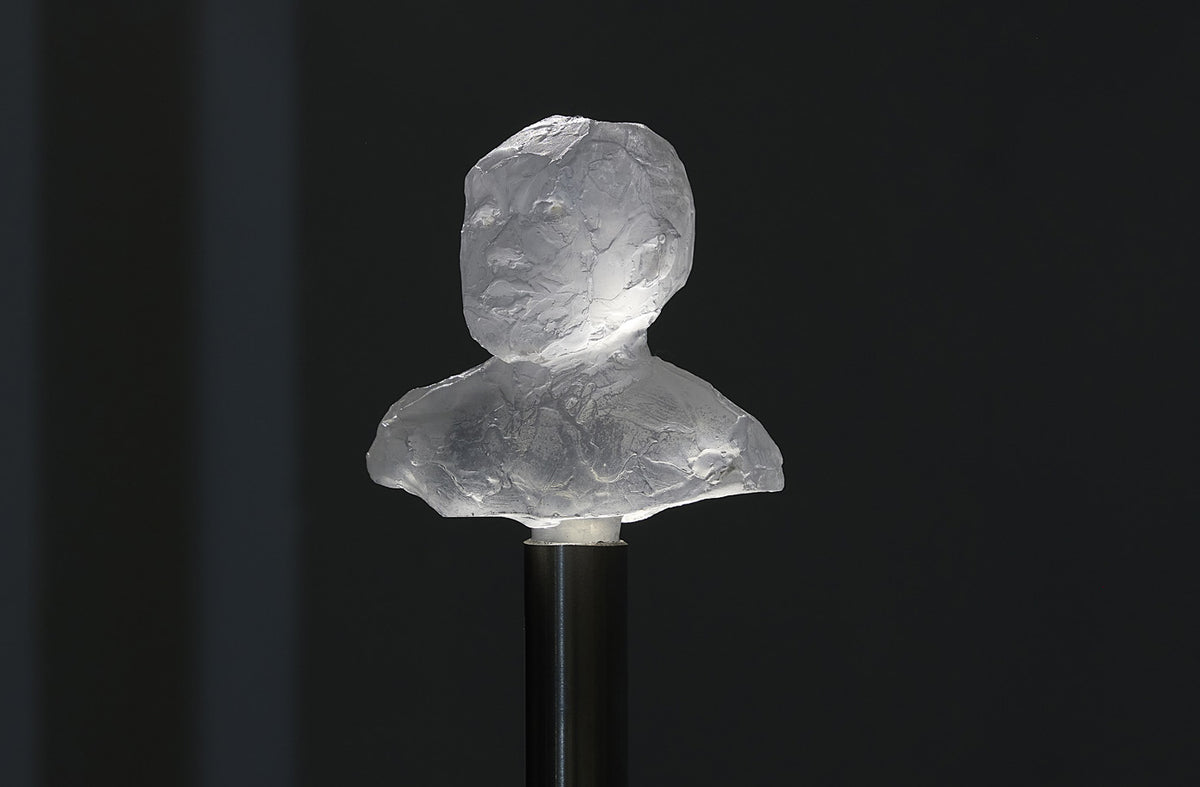
Nathalie Rodach
Crowds are composed of souls. Made of bronze, representing the past, they understand their destiny, forgive one another, and liberate themselves, preparing for a conscious present. Made of glass, representing the future, they herald the world to come and call for a peaceful horizon. They embody the necessity of collective and individual forgiveness. They are part of the Forgiveness series. 5 Sculptures for 5,500 CHF
Jennifer Rubell
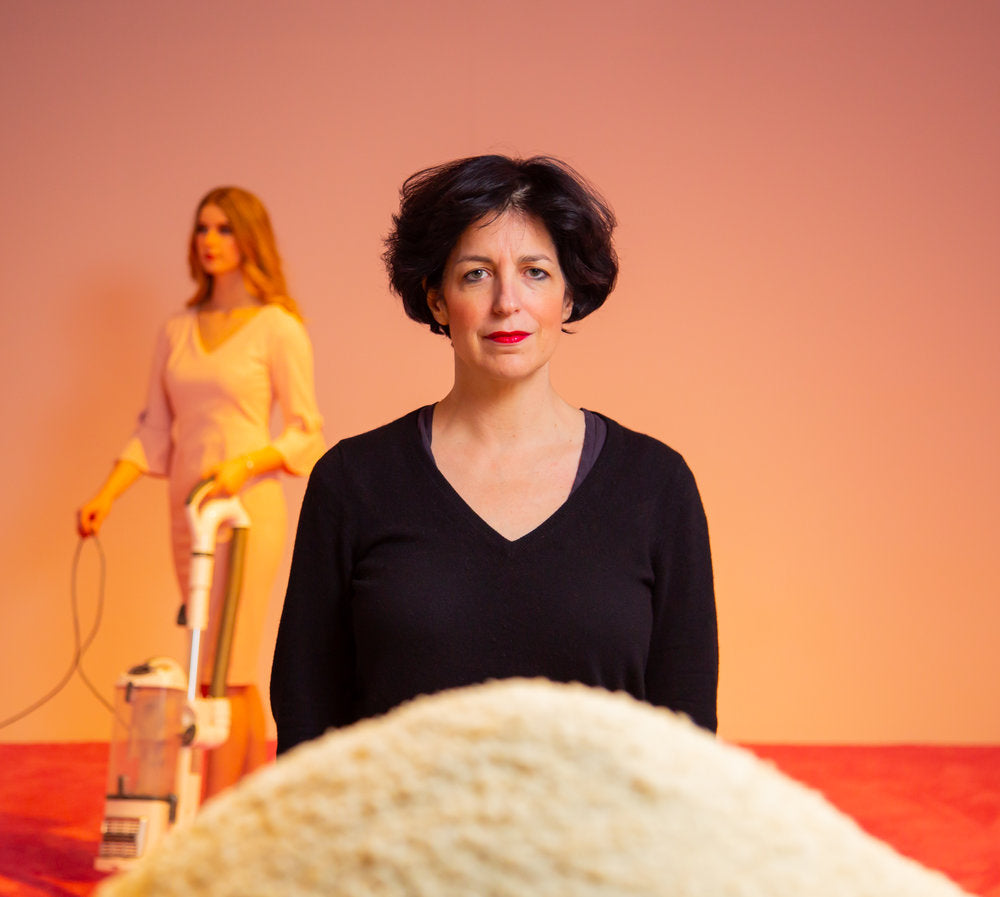
Jennifer Rubell (b. 1970) is an American conceptual artist whose work centers on the viewer’s physical interaction with the object. Her practice has long focussed on the relationship between femininity and feminism, bridging the domestic and the monumental to create work of enormous visual power and poetry. She works in a wide variety of participatory mediums ranging from interactive sculpture, painting and video to food performance. Rubell received a B.A. from Harvard University in Fine Arts. She lives and works in New York City.
Kenny Scharf
Muralist, painter, sculptor, and installation artist Kenny Scharf is best known for his fantastical, large-scale paintings of anthropomorphic animals and imagined creatures, as in Viva Mare Via Mare(2011). Though Scharf’s brightly colored imagery is generally playful, he has remarked that darker themes exist beneath the surface of his works, visible upon closer inspection. Scharf was a part of the 1980s East Village Art movement, along with his good friend and fellow street artist Keith Haring

Regina Silveira
Best known for her explorations of space through optical illusions and geometric constructions, and her surreal printed cutouts of figures with distorted shadows, conceptual artist Regina Silveira has also experimented with video and produced work in embroidery, plastic, porcelain, silkscreen, and wood. Though her practice is diverse, Silveira typically begins her process with drawing and printmaking, and her work is frequently concerned with skiagraphia (the study of shadows), such as Enigma 3 (1981), a photogram of a telephone intersected by the elongated shadow of a fork. In other work she has used depictions of insects as metaphors for the infestation of political corruption in her native Brazil. Silveira studied with the expressionist painter Iberê Camargo.

Valeska Soares
Valeska Soares’s sculptural work – which unfolds in installations and movies – establishes a precise dialogue between conceptual rigor and the manipulation of the senses by means of sensual perceptual games. Interpersonal relationships, glossaries, mazes and gardens are recurring themes in her oeuvre, which alludes to Mythology and Literature as well as the History of Art. Mirrored surfaces often appear as a strategy for involving the viewer, whose senses are stimulated by sounds, smells and visual illusion.

Mickalene Thomas
In her texturally rich paintings, Mickalene Thomas examines the popular characterization of black female identity, celebrity, and sexuality. Crafted with acrylic, rhinestones, and enamel, the vibrant interwoven patterns adorning Thomas’ work are inspired by her childhood in the 1970s. Thomas chooses to depict powerful women such as her mother, celebrities, and iconic art-historical figures. In a 2010 photograph entitled Le déjeuner sur l’herbe: Le Trois Femme Noires (2010), Thomas re-stages Édouard Manet’s famous image, substituting his painted figures for provocatively dressed black women. Such works demonstrate Thomas’s sustained interest in visualizing the black woman’s relationship both to art history and to contemporary culture at large.

Rirkrit Tiravanija
Using human interaction as his primary material, Rirkrit Tiravanija goes beyond performance to create socially-engaged conceptual works that blur the boundaries of art in novel ways and bridge the division between public and private. Whether by offering visitors free curry in Untitled (Free) (1992) or inviting strangers to drop by and drink tea together in a replica of the artist’s home in Apartment 21 (Tomorrow Can Shut Up and Go Away) (2002), Tiravanija initiates ways to enable the public to be a part of the art-making process, what has been called relational aesthetics. Part social experiment, part ecological program, The Land (1999-) consists of an area of arable land in Thailand that Tiravanija and others transformed into a communally run site for participants to pursue artistic, agricultural, and social collaboration. He won a Hugo Boss Prize in 2004.

Janaina Tschäpe
Janaina Tschäpe was born in Munich, Germany, and raised in São Paolo, Brazil. She studied at the University of Fine Arts in Hamburg before moving to New York and completing her MFA at the School of Visual Arts in 1998. Tschäpehas exhibited throughout the world in numerous solo and group exhibitions. Recent exhibitions include a survey show at the Irish Museum of Modern Art in Dublin (2008), the ICP Triennial in New York (2009), and solo gallery shows at Galeria Fortes Vilaça in São Paulo and Galerie Catherine Bastide in Brussels (both 2009). Her work is included in numerous private collections and the permanent collections of museums in Europe, the United States, Brazil and Japan.She lives and works in Brooklyn, New York.
Richard Tuttle
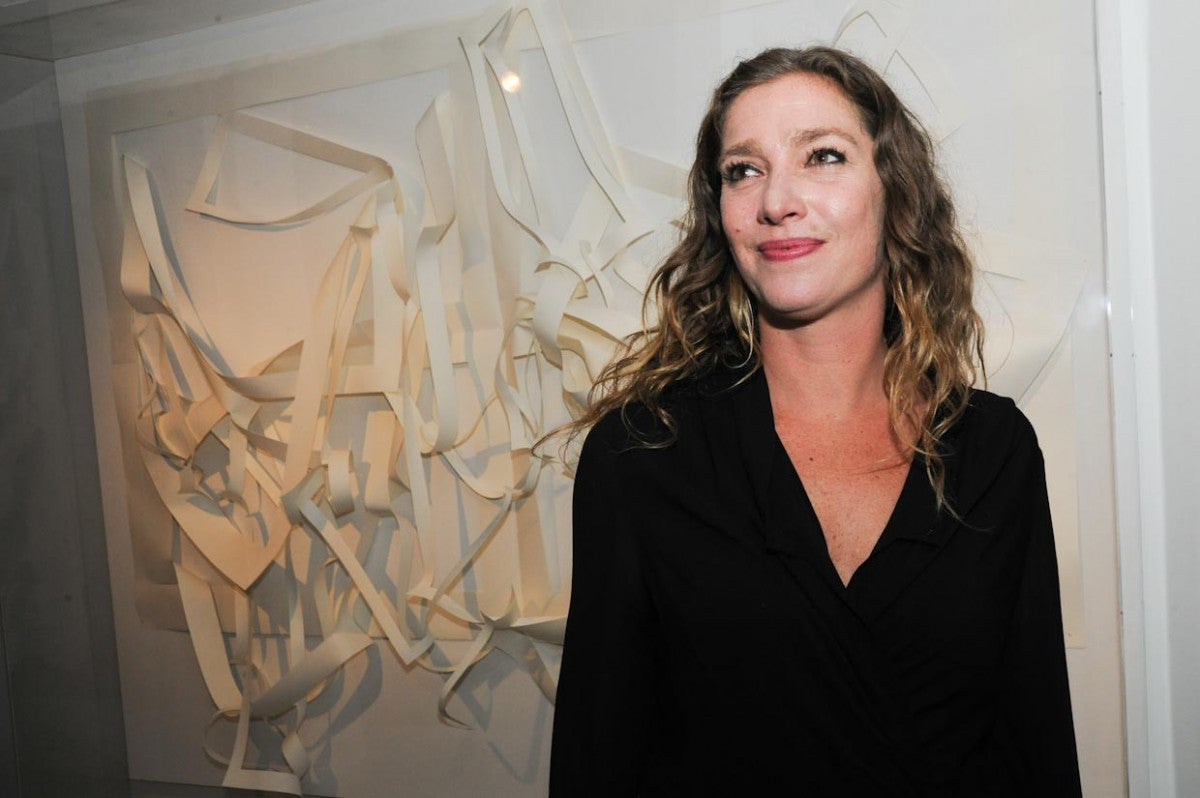
Richard Tuttle’s multifarious oeuvre is a study in scale and line using common materials that have been inventively assembled and exhibited. Much of Tuttle’s work rethinks the potential of the line; the installation Ten Kinds of Memory and Memory Itself (1973) featured a pencil line that detached from the wall it was drawn on and continued as string along the floor. Tuttle’s sculptures experiment with space in similarly inspired ways and are constructed using a panoply of industrial and organic materials, including shrink wrap, tape, metal, paper, and balloons.

Baron Von Fancy
Born and raised in New York City, contemporary artist Baron Von Fancy (AKA Gordon Stevenson,) constantly strives to push the boundaries of his art and designs, employing boldly expressive lettering, incredibly vivid colors, and a range of materials including flourescents, glue, dyes, and reactive paint. Capturing poignant phrases in his paintings, works on paper, graphics, multimedia, and even commercial works, the artist seeks to question conventions by infusing his work with elements of street art that inspired him since he was a child. The artist lives and works in New York City.

Henry Von Wartenberg
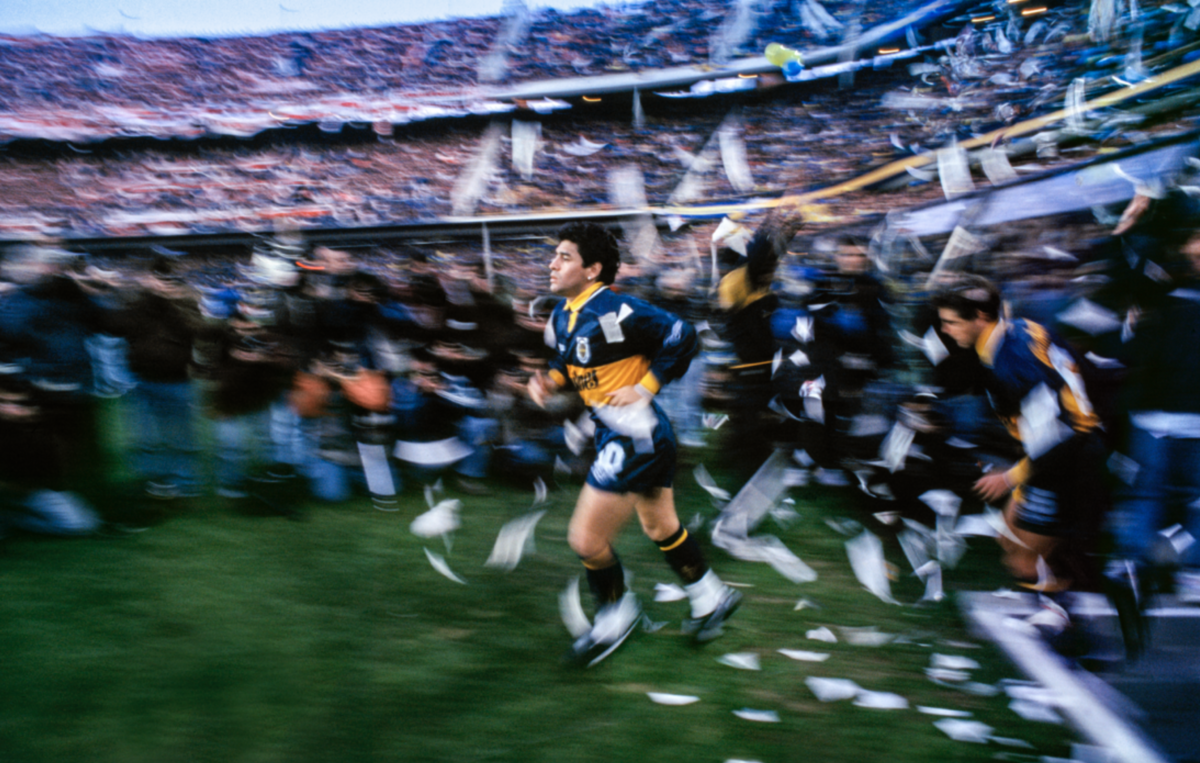
“Apollo, Diego Maradona” 1996, C-print Edition of 5 39.5 x 40 inches (100 x 150 cm) "At the start of the 1996 Superclásico, Diego steps out on the field of La Bombonera. It was his last game against River Plate in the Boca Stadium with the Boca Juniors, team that made him famous. He went on to play for international club teams around the world and became the icon we know today as “Maradona, The Hand of God.” "Al comienzo del Superclásico de 1996, Diego pisa el campo de La Bombonera. Fue su último partido ante River Plate en el Estadio de Boca con el Boca Juniors, equipo que lo hizo famoso. Luego pasó a jugar para equipos de clubes internacionales de todo el mundo y se convirtió en el ícono que conocemos hoy como “Maradona, La Mano de Dios.” Boca 4-1 River (1996) Diego Armando Maradona was an Argentine professional football player and manager. Widely regarded as one of the greatest players in the history of the sport, he was one of the two joint winners of the FIFA Player of the 20th Century award. The pinnacle of his career came as a member of the Argentinean national team that won the 1986 World Cup. In the 1986 World Cup quarter final, he scored both goals in a 2–1 victory over England that entered football history for two different reasons. The first goal was an unpenalized handling foul known as the “Hand of God,” illegal under association football rules due to Maradona using his hand, but because the referees did not have a clear view of the play, it stood to give Argentina a 1-0 lead. The goal’s name derives from Maradona’s initial response on whether he scored it illegally, stating it was made with “a little with the head of Maradona, and a little with the hand of God.” The second goal followed a 60 m (66 yd) dribble past five England players and was voted “Goal of the Century” by FIFA.com voters in 2002. Altogether, Maradona played in four World Cups, and scored an astounding 34 goals in 91 international appearances for Argentina.
Christina Welzer
Korean-American artist Christina Welzer’s work serves as a visible expression of internal conflicts and suppressed emotions. With her delicately crafted pieces, Welzer unveils the hidden narratives of rage, fear, and resilience that often lie beneath a serene surface. Welzer’s meticulously crafted neon sculptures, unveil the tension between what is felt but not seen. Each work is adorned with symbolic representations of inner demons, and invites viewers to confront the dichotomy between outward composure and inner turmoil. In her sculptural work, she has created a series of neons depicting human faces interlaced with demonic entities. The imagery is lasercut into mirror and mounted on a neon backer. When the light is off, the linework is barely perceptible, and the picture rests in the material like a secret. When the neon is turned on, light bursts through the engraving, and the hard lines of the imagery are suddenly all too visible.
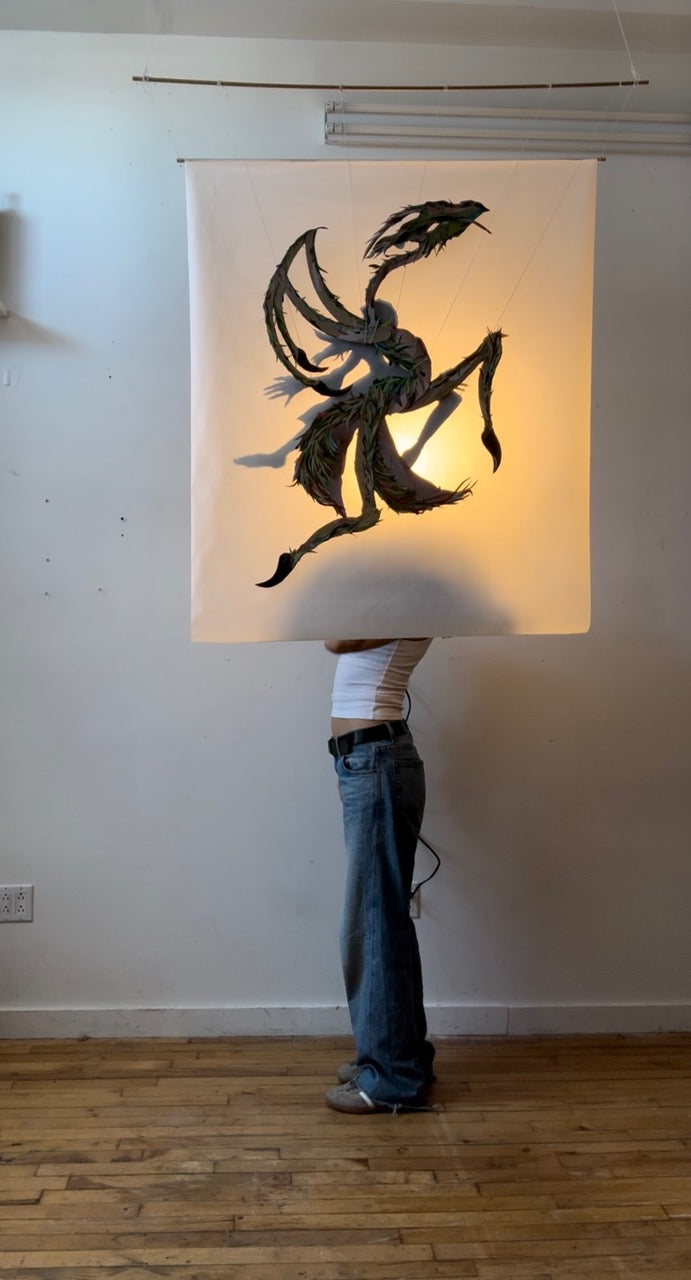
Rob Wynne
Rob Wynne tests the boundaries of kitsch and beauty, sappiness and profundity in his delicately crafted mixed-media objects, installations, drawings, and canvases. Though he uses a range of techniques and mediums, hand-blown glass is central to his work. Claiming that he is “always trying to break rules and embrace the imperfection in glass making,” Wynne demonstrates its malleability, shaping it into text pieces and objects exquisite and absurd, including eyeballs and mushrooms. Text, too, is key to his practice. He uses words—embroidered over images, formed of glass, painted onto objects—to alter meaning and suggest narratives. In his “Embroidered Paintings,” for example, he embroiders open-ended words and phrases, like “come back,” over Rococo images, whose treacly sentimentality he simultaneously sends-up and complicates—hinting that the serious and the mawkish may be shades of the same thing.

Héctor Zamora
Born in Mexico in 1974, Zamora has worked in São Paolo, Brazil, for many years. Some of his major projects have been presented in public spaces, including Errant, a suspended garden on the Tamunduateí River, Sao Paolo, Brazil, 2010; Atopic Delirium, a public intervention located on Jimenez Avenue in downtown Bogota, Colombia, 2009, Paracaidista, Av. Revolucion 1608bis inhabit shelter constructed on to the façade of the museum Carrillo Gil, Mexico City, 2006. He was one of the Lab team members at the BMW Guggenheim Lab Mumbai, India, 2012-13. Some of his outstanding solo shows are Protogeometries, Essay on the Anexact, Labor gallery, Mexico City, Mexico, 2013, Panglossian Paradigm, Redcat, Los Angeles, CA, US, 2012; Reductio Ad Absurdum, Architecture + Art, SMoCA, Scottsdale, Arizona, US, 2012. Inconstância Material, Luciana Brito gallery, Sao Paulo, Brazil, 2012. He has been involved with projects for: 13th Istanbul Biennial, Istanbul, Turkey, 2013; 53rd International Exhibition Biennale di Venezia, Venice, Italy; Medellin International Encounter 2007 (MDE07), Colombia; 27th Biennial of Sao Paulo, Brazil; 12th International Cairo Biennale, Cairo, Egypt; Busan Biennale 2006 Pusan , South Korea; and the 9th Havana Biennale, Cuba. His projects have been included in group exhibitions such as Blind Field, Krannert Art Museum, University of Illinois, Champaign, IL, US, 2013; Resisting the Present, Musée d’Art Moderne de la Ville de Paris / ARC, France, 2012 and Disponible, San Francisco Art Institute, San Francisco, CA, U.S., 2010, among others.

No matches.
“Carlos Gómez Centurión: I Say Mercedario”
Carlos Gómez Centurión: “I Say Mercedario”, is a short film and exhibition of paintings, drawings and frottage works, derived from the artist’s expedition into the heart of the Andes Mountains in April of 2022. The film, produced and directed by Kreëmart’s Raphael Castoriano and Gustavo Travieso, was selected for the 41st edition of Le FIFA International Film Festival in Montreal, Quebec, Canada. The film made its international debut during the festival’s opening weekend, screening Sunday, March 19th at 5:00 pm in the presence of the film crew in Montreal, Quebec, Canada and was previously presented at the Franklin Rawson Provincial Museum of Fine Arts, San Juan, Argentina in September of 2022.


“Carlos Gómez Centurión, “I Say Mercedario” follows the Argentine artist and his team along their journey, traversing the rugged, virgin landscape of la Cordillera de los Andes, to reach El Mercedario, one of the largest glaciers in the region. Throughout the trip, in addition to employing the naturalist movement of open-air painting, the artist also uses the frottage technique developed by surrealist Max Ernst, to take physical imprints of the land on site.
Gómez Centurión has dedicated his life to his work, painting mountains on site for over 40 years. This project covers his latest expedition, as he travels by horses and mules, to the base of El Mercedario, which has rapidly been receding due to climate change. Threatened by the warming temperatures, Gómez Centurión’s set out on a daring journey through the hypnotic landscape of his home country, to secure the glacier’s essence onto canvas before it’s too late. The works from the expedition and film will be shown together for the first time at the Bienal Sur in Buenos Aires, Argentina in June 2023.
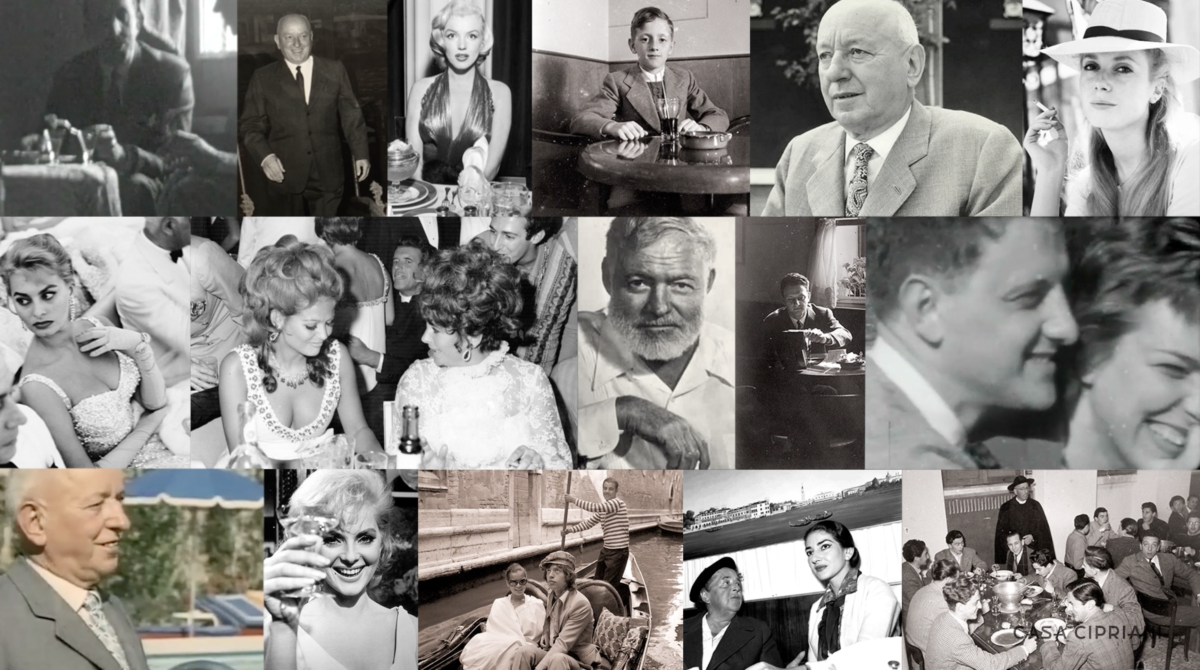
Casa Cipriani Milano
Kreëmart, in partnership with Carmela Cipriani was commissioned to create a film for the second location of Casa Cipriani in Milan, which opened in September of 2022 to be played in the hotel rooms. Following the creative direction outlined in the first iteration of the project in New York City, the Casa Cipriani Milano video collages together both archival and new footage of the Cipriani family mixed with onsite shots of Venice, New York and Milan. The result is a hypnotic and lively blend of new and old, perfectly encapsulating a family who builds off the legacy of their past towards an even bigger future.


Casa Cipriani New York
The Kreëmart team, in partnership with Carmela Cipriani, was commissioned by Casa Cipriani NYC to create a custom film to be played on screens in the hotel rooms as well as at the club level entranceway. The film interlaces archival tapes of the Cipriani family with modern footage shot by Raphael Castoriano, Carmela Cipriani and Carlotta Cerquetti, to tell the story of this prolific luxury lifestyle brand and the family behind its one hundred years of success.


Kreëmart Manifesto
The first reading of the Kreëmart Manifesto, March 24th, 2020, on the eve of the new moon.

Pardon Me™
“Pardon Me” is a platform for creatives across all spectrums to communicate their true, human and practical strategies for embracing the New World. The recuperation of time that the 2020 Covid-19 Pandemic has introduced into our lives has created a renewed desire to recalibrate, learn, unlearn and empathize. The flow of communication, from social media to media to live, has become more intimate, raw, and visceral at times. Our more personal assets, our vulnerabilities have been “upgraded” in terms of desirability. More controlled environment and productions might eventually return, but as humans and consumers we are now savoring the new intimate and it will be hard to deprogram in favor of a return to the contrived and epidermal pre-outbreak conversation. The “Pardon Me” video series captures the voices of over 70 creatives in lockdown around the world, and serves as the ultimate testimony of these strange times.
Salotto Angela Missoni
Salotto “Angela Missoni,” a fairytale imagination of the private living room of the Missoni brand’s award-winning creative director. The immersive habitat explores the intersection of art, fashion, and life itself as a collaborative space for dialogue between cultural brands. Conceived by Angela Missoni and Kreëmart founder Raphaël Castoriano, the space reflects the spirit of an intimate, comfortable home. Salotto “Angela Missoni” is the second collaboration in the brand’s ongoing Surface Conversion project at the Missoni Boutique in New York.
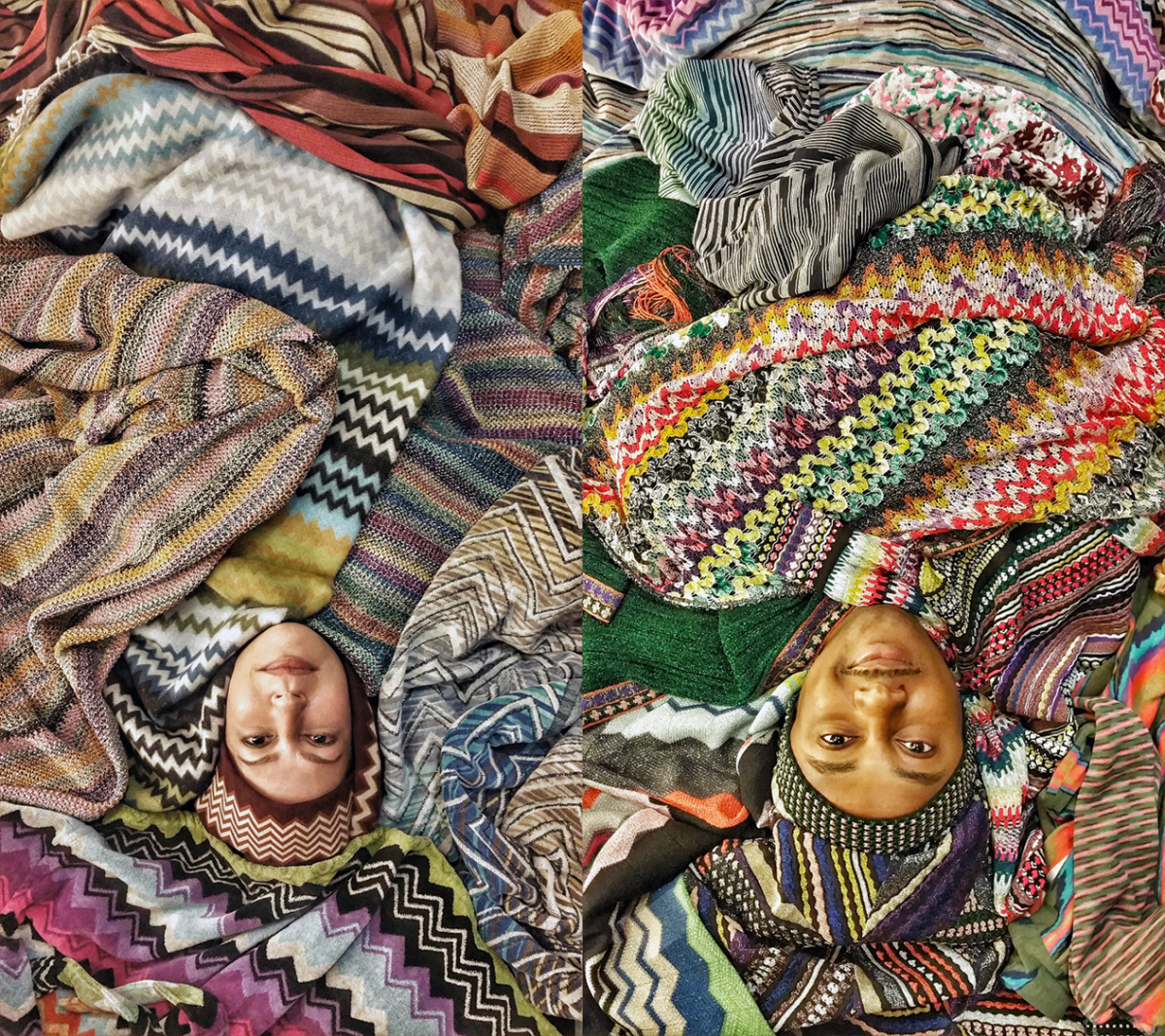


Spectators could come and go as they pleased throughout the duration of the performance. Cultural collaborators include ABC Home, Assouline, Barilla Restaurants, Ercole Home by Ornella Pisano, Illy Cafe and Levy Lighting and the Salotto hosted performances and conversations with creatives Jerome Lamaar, Donna D’Cruz, Deborah Needleman, Enrique Baeza, Nir Hod, and Romina de Novellis.

Guido Mogni
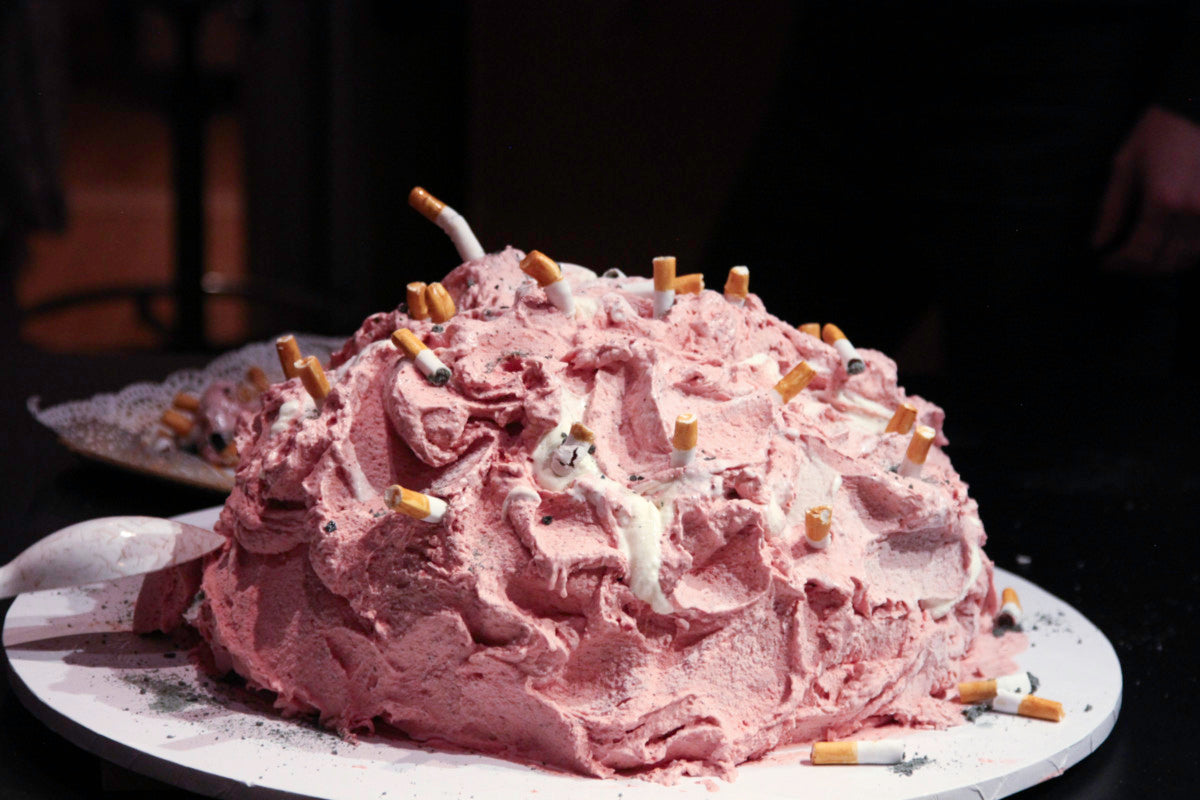
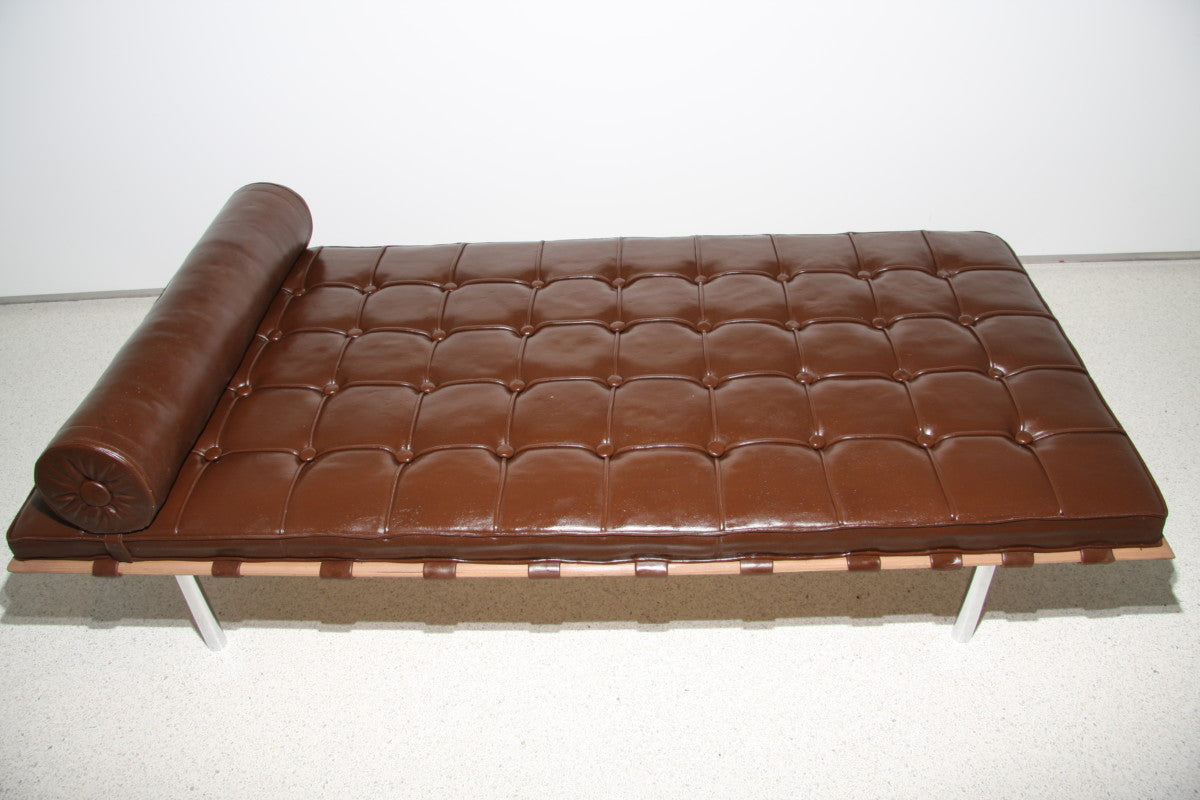
Chef Guido Mogni was born in Buenos Aires, Argentina. As a child, his family lived in China and Germany before eventually settling in Italy. He began his career working as an apprentice at the Original Sant Ambroeus in Milano. He continues working at Sant Ambroeus Palm Beach as their head pastry chef and has partnered with Kreëmart on a number of happenings over the past 10 years, most notably with Leandro Erlich for the “American Patrons of the Tate at Haunch of Venison,” building a one-to-one replica of the famous Mies Van Der Rohe Barcelona Daybed. Mogni also worked with Kreëmart on Marina Abramovic’s “Golden Lips” and “Silver Nose” project, Maurizio Cattelan “Bubblegum Cigarettes,” Mariko Mori “A Pearl for Oneness” and Janaina Tschape “There is a Pink Cloud for You.”
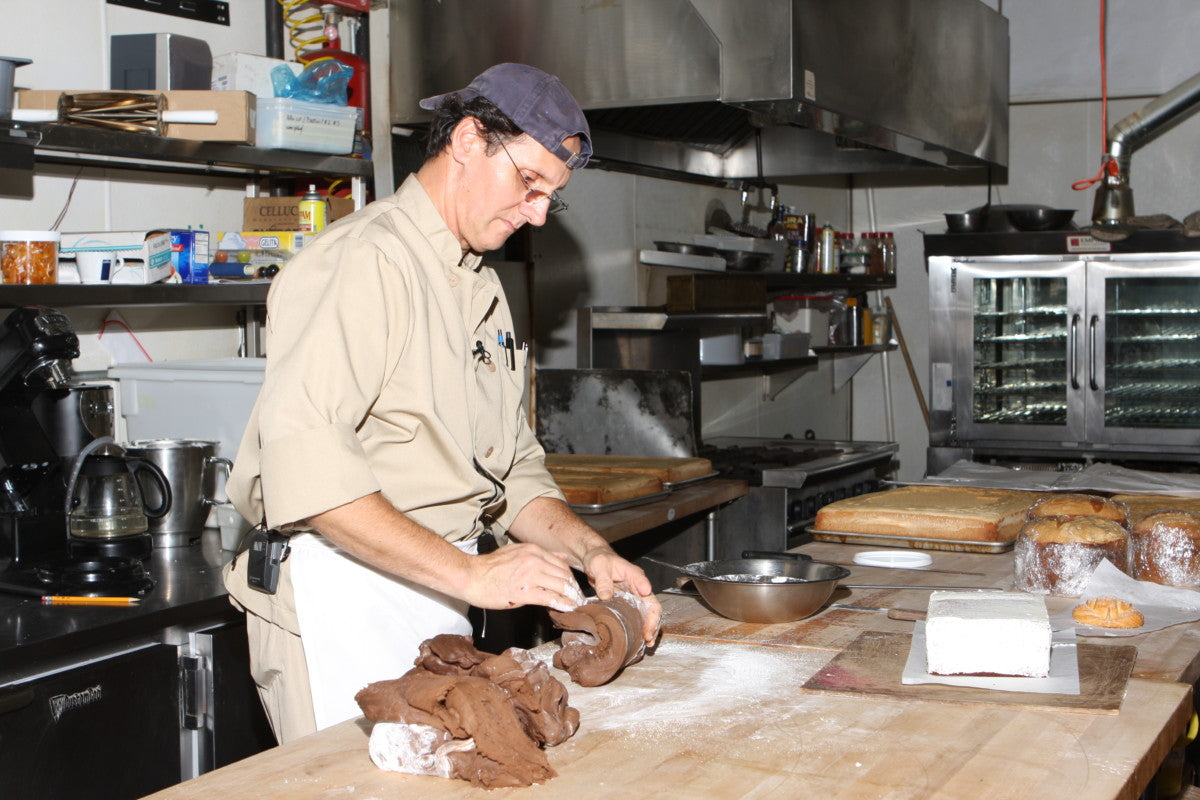



Dessiree Salaverria
A cake designer and contestant on the hit Netflix show “Is It Cake,” Dessiree Salaverra creates jaw-dropping, artistic cakes out of her Palm-Bay studio. The owner of SugarDreams LLC, her clients have always voiced their appreciation for the cake artist’s five-star service. Her cakes range from the classic tiered to fully sculpted and hand painted. Each cake is one of a kind, a unique marvel created with culinary and artistic mastery. She strives to create one of a kind artistic creations that form an experience of joy and beauty. Extreme passion, dedication and numerous hours are put into every piece of work Salaverria creates. Her favorite moment is when the creation is cut and her art becomes delicious cake. Salaverria worked with Kreëmart on the Leandro Erlich project “You Can’t Have Your Cake and Eat It Too” in Miami Beach, 2022.


Ladurée
Ladurée is a French luxury bakery and sweets maker house created in 1862. It is one of the world’s best-known premier sellers of the double-decker macaron, fifteen thousand of which are sold every day. As Chairman of Ladurée and Vice-Chairman of the Holder group, David Holder is known for his ethical and principled approach to business and as a man who also allows his feelings and intuition to play their part. Raphael Castoriano worked directly with the chefs at Ladurée to craft the Pastry Portraits of Marina Abramovic, Tony Oursler, and Mastercard.


Pierre Hermé
Famous in France, Japan and the United States, the man that Vogue called “the Picasso of Pastry” revolutionized pastry-making with regard to taste and modernity. With “pleasure as his only guide”, Pierre Hermé has invented a totally original world of tastes, sensations and pleasures. With his original approach to the profession of pastry chef, he revolutionizes even the most firmly entrenched traditions. For example, he prefers discreet pastry decors and “uses sugar like salt, in other words, as a seasoning to heighten other shades of flavour.” Refusing to sit on his laurels, he is always revising his own work, exploring new taste territories and revisiting his own recipes. Pierre Hermé collaborated with Hector Zamora for his project “But a Melon for Ecstasy” at the Palais de Tokyo in Paris, France.


Rock Candy
The Rock Candy is the first boutique Brazilian gourmet candy shop. The first pilot store opened in 2012 in Jardins – São Paulo. They specialize in customizing confections for weddings, birthdays, parties, and corporate events, creating unique products for companies from various sectors. The high level of detail makes them an ideal collaborator, creating a strong emotional relationship with their customers. Chef Fred Gavioli worked with Kreëmart and Rirkrit Tiravanija on “Untitled 2015 (tomorrow is on our tongue, as today pass from our lips)” for the Centro Cultural Banco Do Brasil.

Paco Roncero
Paco Roncero is one of the leading representatives of the avant-garde Spanish cuisine, not just within Spain but also abroad. A technical and creative signature cuisine which goes beyond a personal cooking style, and also represents a way of offering and understanding gastronomy as a unique sensorial experience. He collaborated with Glenda Leon on “Cada Palabra es una Forma del Tiempo” project in his native Madrid, Spain.


Kuramata Cakes & Sugar Flowers
Based in Brooklyn, NY, Hiroyo Kuramata is an experienced custom cake and sugar flower designer. She collaborated with Kalup Linzy on the “A Memorial for Taiwan” project at the Whitney. Kuramata started baking as a young girl while growing up in Tokyo. From Japan, she followed her passion all the way to NYC to attend the Institute of Culinary Education. After graduating, Kuramata was hired by the prestigious Nobu restaurant, as well as the fast-paced kitchen of Financier Patisserie. This experience fueled her love for elegant pastry technique, and what better place to refine her skills than Paris. With her dedication, natural talent, and strong resume, she began work at the famed French patisserie, Laduree. After her time in Paris, Kuramata returned to NYC, the city she feels most embraces her international experience, innovation and style. While working in several top cake shops in the city has given her diverse experience in the market, there’s nothing she enjoys more than to create her own custom cakes to please and delight her clients.


Megan Fitzroy
Megan Fitzroy Phelan is the co-owner and executive pastry chef at Longoven in Richmond, VA. In 2009 Megan set her sights on New York City and accepted a pastry cook position working under Dominique Ansel at Daniel Boulud’s acclaimed fine-dining restaurant, Daniel. In 2011, she joined the team at Rich Torrisi and Mario Carbone’s Torrisi Italian Specialties and Parm Restaurants, where she earned critical acclaim for both her ice cream cake and pastry programs. Nearly two years later, she accepted the corporate pastry chef position at Jim Lahey’s Sullivan Street Bakery, managing wholesale production as well as distribution to the group’s restaurants throughout New York. In 2014, Megan and her husband, Patrick, moved to Richmond, Virginia with the goal of opening a restaurant with their friend, Andrew Manning. After three years of highly successful pop-ups, that dream became a reality as the trio opened Longoven in June 2018. Here, Megan has designed a wildly inventive pastry program that showcases specific flavors in beautifully presented dishes.
She collaborated with Kalup Linzy on the “A Memorial for Taiwan” project at the Whitney.


Pedro Benoliel
Pedro Benoliel inherited a taste for cooking from the lively celebrations of his Jewish family. Influenced by his experiences outside of Brazil and its northern roots of Brazil, Pedro loves extracting food flavors in long cooking cycles. In search of adventures, stories and flavors, he went to Sao Paulo to work with Buffet Monique Benoliel. He collaborated with Stephan Doitschinoff for his performance at Art RIO.


Creative Edge Pastries
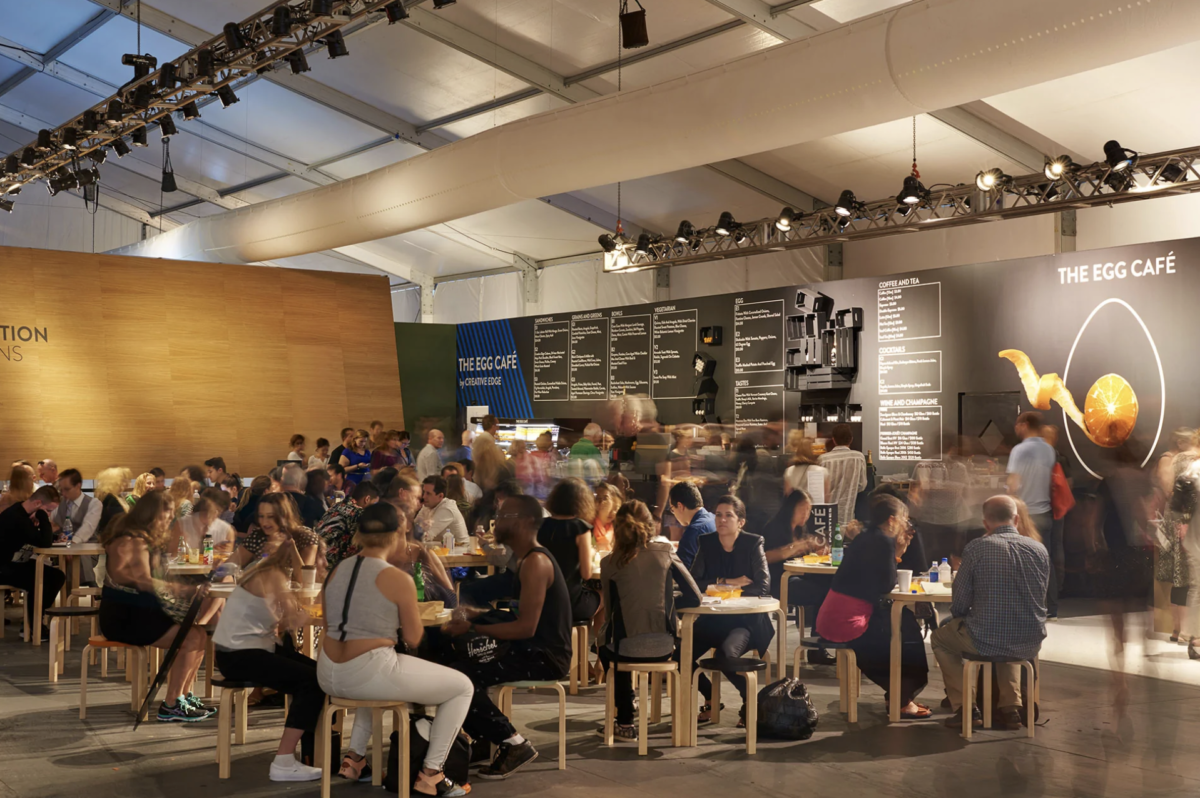
For over 35 years, Creative Edge Parties has become the most prestigious catering and event planning company in the New York area, Washington DC/Maryland, and now South Florida, dedicating themselves to culinary excellence, flawless event management, highly professional service and meticulous attention to detail. From corporate events, to casual cocktail parties, from formal weddings, to intimate gatherings, the staff works tirelessly to orchestrate your ideal event. When it comes to celebrating life’s milestones – large or small – Creative Edge is the place that can make the impossible, possible. Creative Edge’s Chef Bob Spiegel worked with Mickalene Thomas for her cake at the “American Patrons of the Tate at Haunch of Venison” and Chef Kim Barrett worked with Ryan McNamara at the “American Patrons of the Tate x W Magazine.”

Dominique Ansel
Dominique Ansel is the chef and owner of Dominique Ansel Bakery in New York City. Since its opening in November of 2011, the chef’s eponymous bakery was awarded Time Out New York’s “Best New Bakery of 2012” and Metromix’s “Best Bakery of 2012”, all within four months of opening its doors. Today, it is also Zagat 2013’s highest ranked bakery and listed as one of the Best Bakeries in the U.S. by Daily Meal. Dominique Ansel worked with Kreëmart on the “American Patrons of the Tate” project at the Haunch of Venison with Mickalene Thomas.


Cannelle Pastries
Cannelle Patisserie brings their love of the art of pastry making from their humble beginnings at the coasts of Brittany, France and Sri Lanka to the shores of New York City. Through hard work and expertise of serving celebrities and Presidents in Waldorf Astoria, they are honored to give New Yorkers a taste of world renowned French pastry at their location in Jackson Heights, Queens. Cannelle Patisserie collaborated with Kreëmart and artist Sandra Gamarra for the American Patrons of the Tate x W Magazine at the Haunch of Venison.

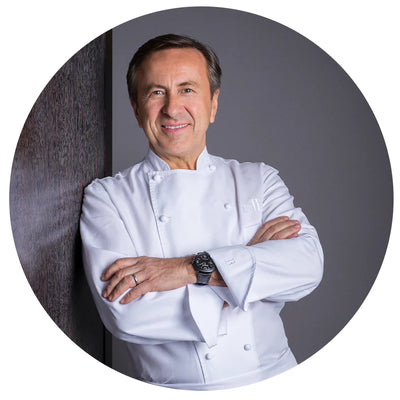
Daniel Boulud
Originally from Lyon, Chef Daniel Boulud is widely celebrated as one of America’s leading culinary authorities. Since arriving in New York City in 1982, he has continually evolved his cuisine and expanded his reach to properties across the U.S., as well as London, Toronto, Montreal and Singapore.
His culinary empire has brought him many accolades, yet his inspiration remains grounded in the rhythm of the seasons. From his Michelin-starred flagship, Daniel, to his properties across the globe, Boulud’s signature remains the contemporary appeal he brings to soulful dishes rooted in the French tradition.


Krispy Kreme
Krispy Kreme is a global doughnut and coffee brand known for its iconic Original Glazed® doughnuts, freshly made and enjoyed around the world.

Fabiola Gouveia
With a degree in engineering, which brought her discerning eye of perfect construction to each line and proportion, Fabiola Gouveia has refined aesthetic sensibility in cake design. Back in Brazil, she led the Fleur de Sucre Pâtisserie in São Paulo. Now beginning another phase in her professional life, she returns to her hometown of Rio de Janeiro to create BOLERIE by Fabiola Gouveia. executed by Fleur de Sucre.


Il Laboratorio del Gelato
Il laboratorio del gelato is a close-knit team dedicated to the creation of world-class gelato, who collaborated with Olaf Breuning at the “American Patrons of the Tate” at Haunch of Venison. They adhere to the original artisanal Italian method of gelato-making in order to create exceptional gelato and sorbet: dense texture, superior consistency, and absolute purity in flavor. They source local and organic ingredients to ensure only the highest quality, then transform them: juicing and zesting lemons, peeling avocados and peaches, pitting cherries, seeding vanilla beans and so much more. They roast their own pistachios and almonds and steep exceptional coffees and teas and spices to extract flavor. All of their products are handmade in small batches in the kitchen on the Lower East Side.


Rosebud Cakes
Rosebud Cakes exists to extend the experience of edible art into all spheres of excellence. All of their staff are trained in art and have backgrounds in pastry or baking. From the sensual experience of a taste made from fresh ingredients and reduced sugar to the creation of works of art that far exceed all expectations, Rosebud Cakes will always strive to achieve that perfect balance of quality inside and out. Kreëmart worked directly with Chef Elin Katz of Rosebud Cakes to produce two life-sized cakes of Debbie Harry and Marina Abramovic for the MoCA Annual Gala in Los Angeles.


Unique Designer’s Cake
Carolina Montoya works with architect husband Fernando, to create unique designer cakes in their South Florida showroom. Inspired by the dynamic creations she saw on Food Network, Montoya set about the task of combining her culinary skills with the meticulous attention to detail required to craft architectural scale models. The result is a breathtaking array of sculptural cakes as amazing as anything seen on television. Carolina worked with Kreëmart to produce Anselm Reyle’s neon sculpture with edible frosting that glowed blue, for Miami Art Basel.

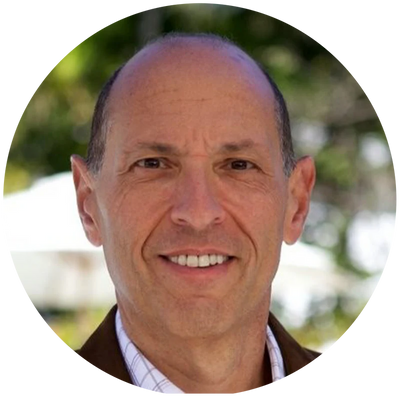
Chef David Schwadron Catering & Events
Known as the premier off-premise caterer in South Florida, Chef David Schwadron Catering and Event Design has an established national reputation for exceptional food, creativity and presentation combined with outstanding service. For over twenty five-years Chef David’s eclectic style is abound with inventive interpretations and modern creations based on the very best traditions of American, regional and international cuisine. Schwadron collaborated with Kreëmart and Los Carpinteros for “Brazo Gitano” at CIFO during Miami Art Basel.


Del Posto
Chef Brooks Headley, of Del Posto, collaborated with artist Rob Wynne on his cake for the “American Patrons of the Tate” at the Haunch of Venison. Del Posto is the refined creation of Mario Batali, Joe Bastianich, Lidia Bastianich and partner/Executive Chef Mark Ladner. In October of 2010, Del Posto received a glowing four-star review from The New York Times, the first Italian restaurant to do so in nearly 40 years. At Del Posto, the ambiance of European luxury, palate-enlightening cuisine, polished service, and a world-renowned wine list culminate in an Italian dining experience unlike any other.

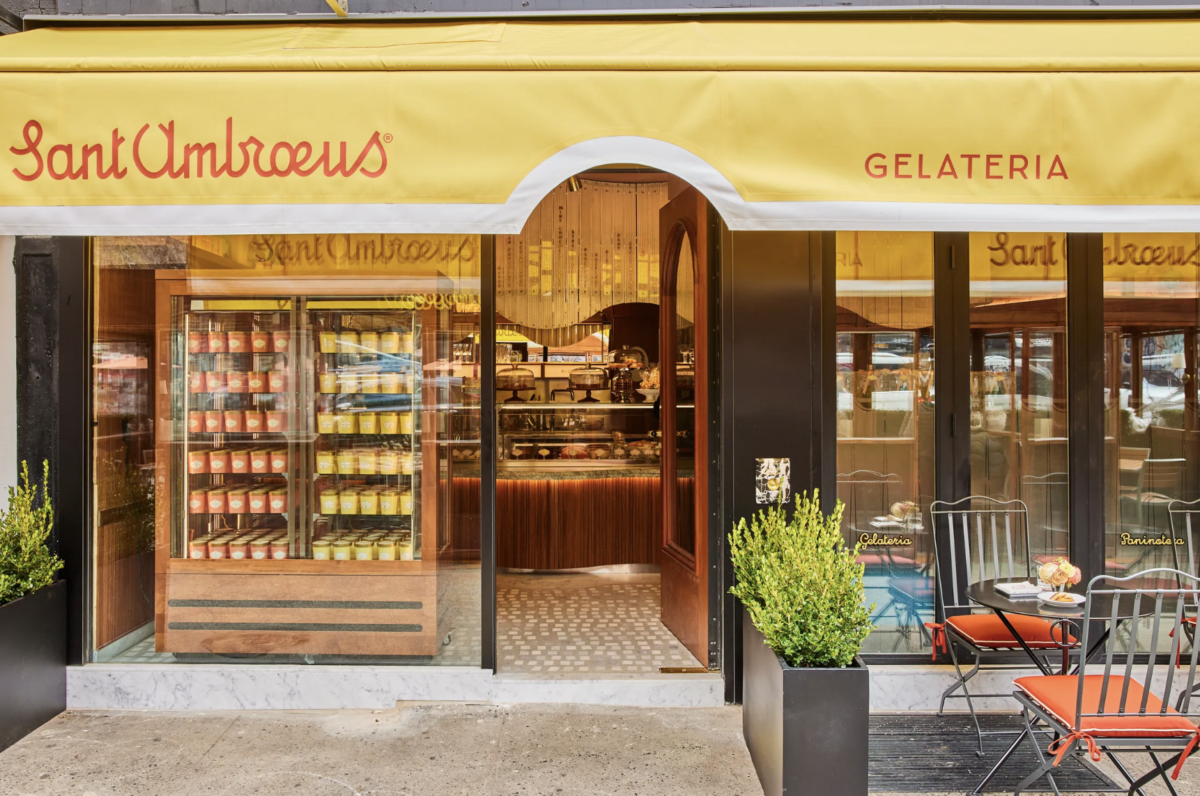
Sant Ambroeus
Originally opening its doors in Milan in 1936, today Sant Ambroeus has become a world-wide cultural phenomenon. New York diners can choose between five locations in Manhattan—in thriving neighborhoods like the West Village, Soho, and the Upper East Side—as well as an outpost in the seaside community of Southampton. Sant Ambroeus has remained true to Milanese origins—and to the flavors, atmosphere, and standout service of that first location. Each outpost boasts a unique character and design: a nod to ’60s and ’70s Italy here, Etro textiles or Le Corbusier prints there, with perhaps an oversized Clifford Ross photo adding a contrast in minimalism. Throughout, the soul is always the same: quality, craftsmanship, and the feeling of being among friends. Depending on the location, those friends may include a mix of artists, tastemakers, fashion editors, and writers, many of whom claim to do their best thinking over a vitello tonnato or a perfectly made cappuccino. In the fall of 2016, Sant Ambroeus Palm Beach opened its doors to a new community, bringing a touch of old-world Milan—via contemporary Manhattan—to sunny Florida. Sant Ambroeus worked with Kreëmart on the “American Patrons of the Tate” at Haunch of Venison, and Marina Abramovic “Golden Lips” project at the MOMA to celebrate the artist’s retrospective